PU Casting Foam Resins
WEBAC® 2260/B60
- Classic Line
Effective filling of the annular gap in a steel tank with expanding PU foam
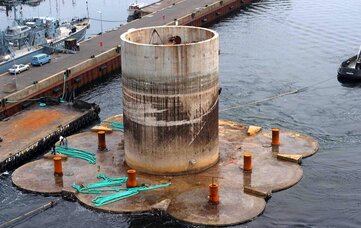
In a double-walled steel tank, the annular gap—the space between the outer and inner steel walls—needed to be filled. The aim was to seal this cavity/void with a pressure-resistant material in order to ensure long-term structural safety and tightness.

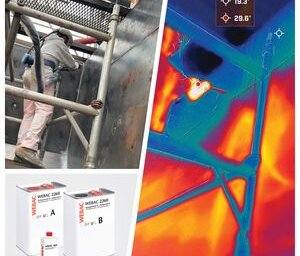
WEBAC 2260, a self-expanding PU foam specially developed for cavity filling, was used.
The material was injected into the annular gap through defined holes in the inner steel wall. Due to the physical properties of PU foams, which generate heat during the reaction process, the filling process could be monitored precisely. A thermal imaging camera was used for this purpose to visually track the spread of the foam in the annular gap.
The work was carried out using a 2C injection pump, which ensured that the material was applied evenly and in a controlled manner. Thermal images document the thermal development during the filling process and provide additional information on the complete filling of the annular gap.
PU Casting Foam Resins
WEBAC 2260 is a slow-expanding, thermally insulating PU casting foam resin. It cures into a pressure-resistant, non-brittle rigid foam with a fine-pored, closed-cell, and hydrophobic structure. It is used to fill voids, cracks, and gaps, e.g., in double-shell masonry or around pipe penetrations, and also serves as a sealant.


Get information now for users of products containing diisocyanates.