Acrylat Gels
WEBAC® 240
- Classic Line
- Consolidation Line
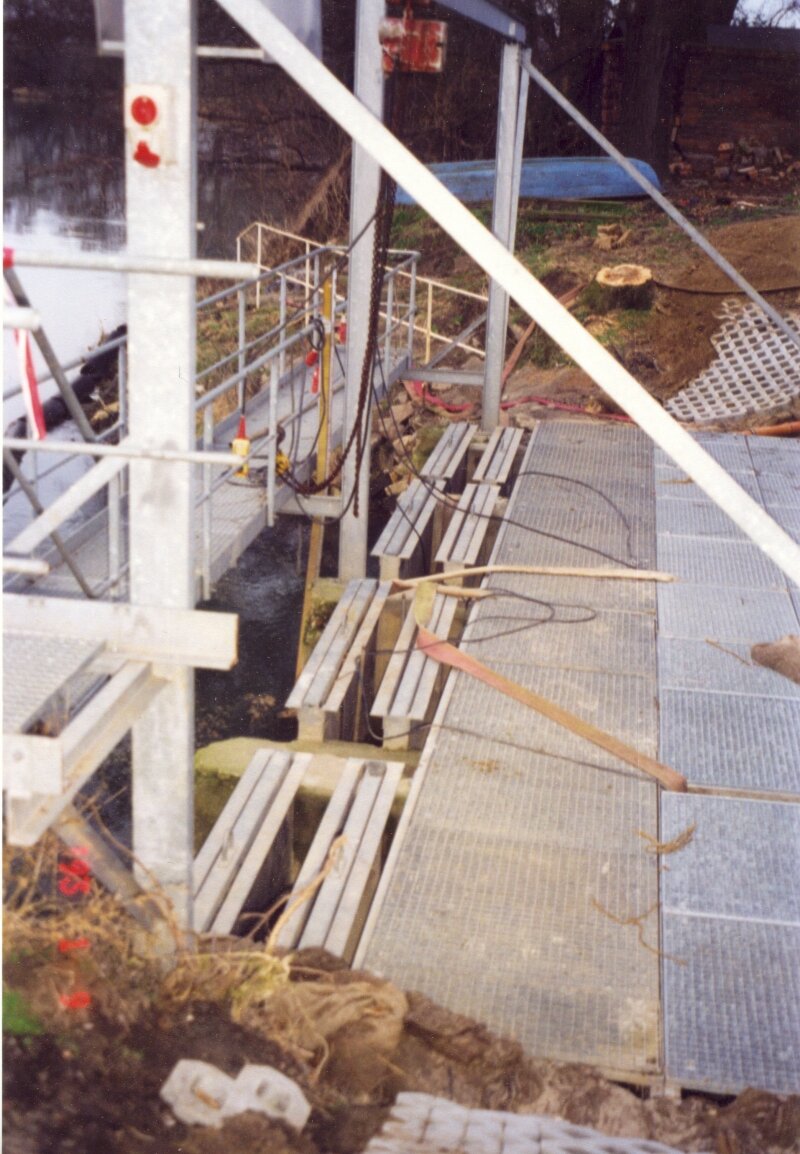
The Altjeßnitz pumping station on the Mulde river near Bitterfeld-Wolfen was modernized as part of a comprehensive renovation. The entire landward section of the pumping station—with the exception of the screen in front of the pump chambers—was to be dismantled. The aim was to create a safe working environment while at the same time providing temporary sealing against the water of the Mulde river.

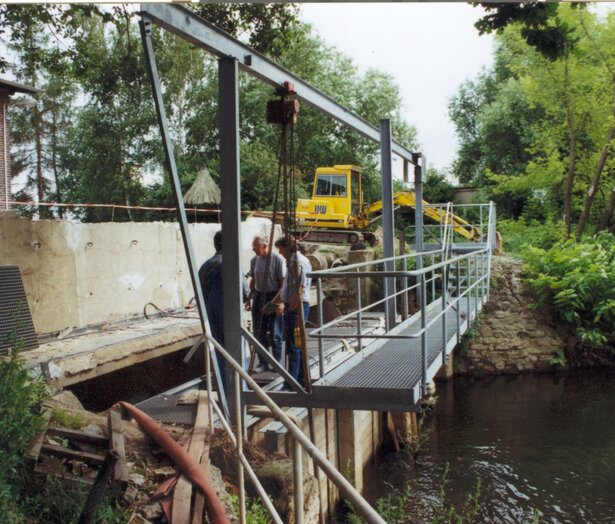
The Altjeßnitz pumping station on the Mulde river near Bitterfeld-Wolfen was modernized as part of a comprehensive renovation. The entire landward section of the pumping station—with the exception of the screen in front of the pump chambers—was to be dismantled. The aim was to create a safe working environment while at the same time providing temporary sealing against the water of the Mulde river.
The area to be renovated was below the water level of the trough, which had a water level of over 2 meters. Reliable sealing of foundation pits was required, which had to remain in place for at least one year and be resistant to freeze-thaw cycles.
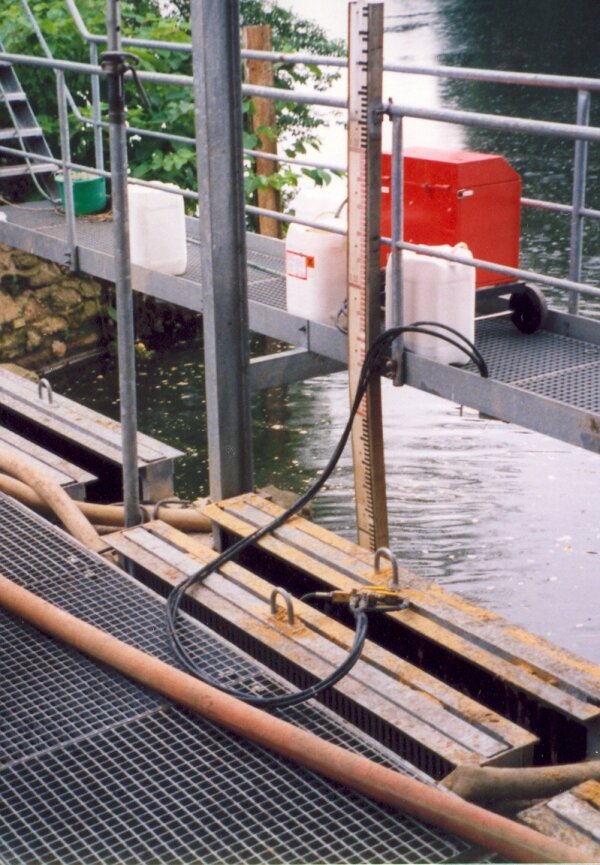
The conventional solution—installing a sheet pile wall—was cost-intensive. Therefore, an alternative method was considered: using the space between the rakes of the open weir as a temporary sealing layer. The solution used had to be reversible and not cause any contamination in the water.
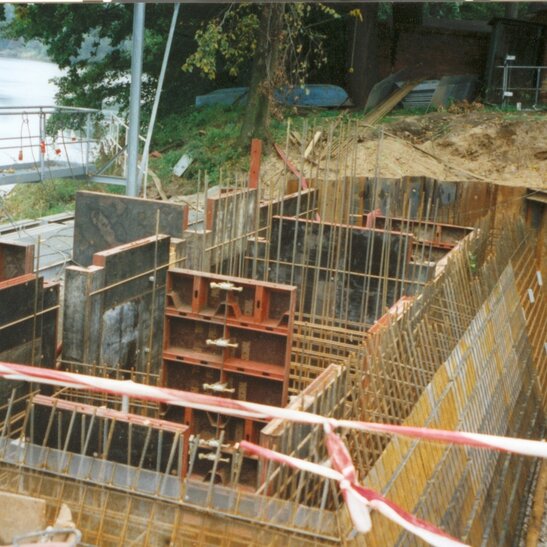
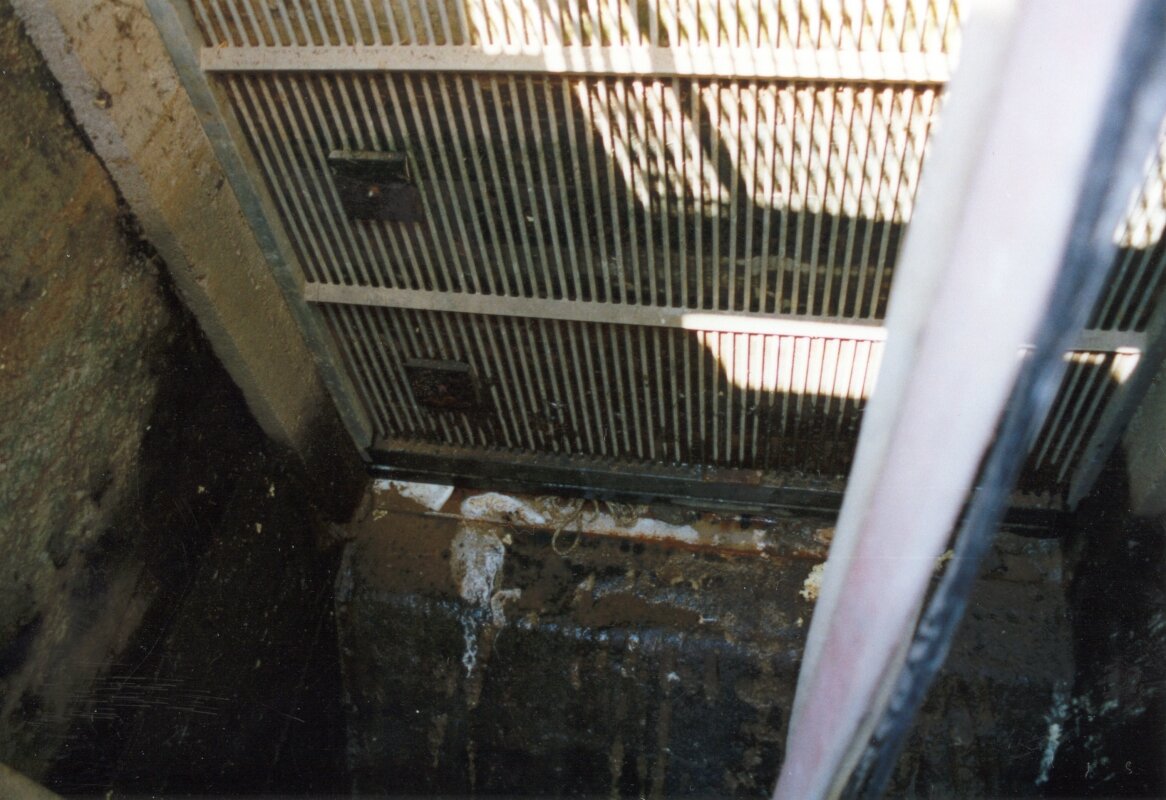
After evaluating various options, the decision was made to use WEBAC 240, a polyacrylate gel that was filled with sand in a slow setting. The rakes were covered with boards and PE film and then lowered. This created a cavity/void that could be filled layer by layer with the gel-sand mixture – even at full water level.
The mixture, with a density of over 1.8 kg/dm³, sank reliably to the bottom and was applied up to 30 cm above the highest expected water level. After the water had been pumped out, any remaining leaks were sealed with WEBAC 240.
Over the course of a complete summer and winter period, the approx. 15 cm thick gel-sand seal proved to be permanently tight – even under water pressure. Once the work was completed, the material could be completely removed. The chosen method enabled the pump station to be dismantled and rebuilt without disruption – with significant cost savings compared to conventional methods.
This measure underscores the potential of polyacrylate gels for economical, flexible, and sustainable solutions, even in the temporary sealing of foundation pits.
Acrylat Gels
WEBAC 240 is a low-viscosity, fast-setting polyacrylate injection gel with National Technical Approval from DIBt (B-concentration 2%). After curing, it forms a waterproof, firm-elastic gel that reliably absorbs dynamic and mechanical stresses. It is particularly suitable for curtain injection—either in the subsoil immediately adjacent to the structural element or within the existing building structure—as well as for subsoil stabilization and waterproofing or damp proof courses (dpc).


Get information now for users of products containing diisocyanates.