Acrylat Gels
WEBAC® 240
- Classic Line
- Consolidation Line
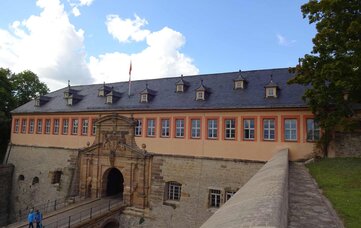
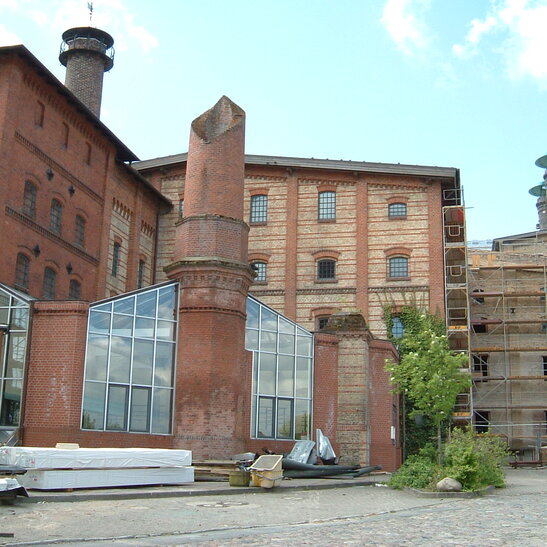
The Grevesmühlen malt factory, an important industrial monument in Mecklenburg, was built in 1893. At that time, the Grevesmühlen brewery location was experiencing rapid growth, which led to the expansion of the existing malt factory. Today, the listed building has been renovated as part of a conversion project and serves, among other things, as a location for retail, medical facilities, and administration.


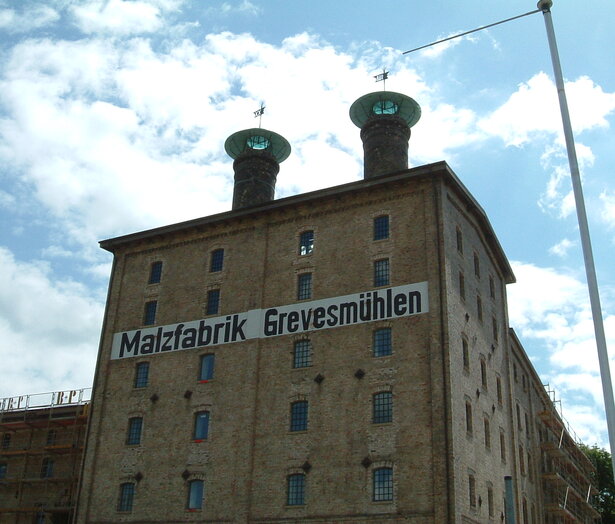
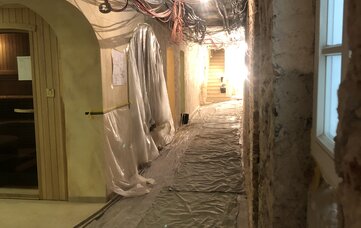
During the renovation of the Grevesmühlen malt factory, around 660 m² of basement walls with a thickness of up to 120 cm had to be waterproofed. Due to the adjacent buildings and the partial basement, conventional external waterproofing was not feasible. Curtain injection on the outside of the components also posed a considerable technical challenge with these wall thicknesses.
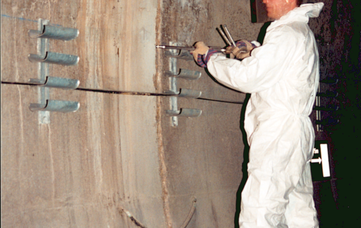
As the masonry had sufficient porosity, it was decided to create the sealing curtain within the wall cross-section. This made it possible to reduce the drilling depth to around two-thirds of the wall thickness, which significantly reduced the amount of drilling work required – a decisive advantage in terms of time and resources with around 4,000 drill holes.
Instead of the usual slow-reacting WEBAC 250 injection gel, WEBAC 240 acrylate gel, which is specially suited for porous and absorbent building materials, was used for the curtain injection. This injection material seals the pore structure within the wall construction and forms a new, vertical sealing layer, allowing the inner surfaces of the basement walls to dry out.
In addition, the room was dried out to accelerate the drying of the masonry – an important step with solid wall thicknesses in order to minimize long-term moisture release from the masonry.
Acrylat Gels
WEBAC 240 is a low-viscosity, fast-setting polyacrylate injection gel with National Technical Approval from DIBt (B-concentration 2%). After curing, it forms a waterproof, firm-elastic gel that reliably absorbs dynamic and mechanical stresses. It is particularly suitable for curtain injection—either in the subsoil immediately adjacent to the structural element or within the existing building structure—as well as for subsoil stabilization and waterproofing or damp proof courses (dpc).


Get information now for users of products containing diisocyanates.