PU Injection Resins
WEBAC® 1660
- Classic Line
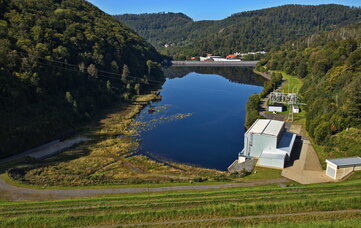
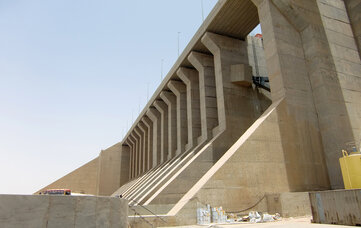
A widely ramified system of dams was built in the northern Harz Mountains – originally to supply industrial water for mining, but now primarily used for flood protection and increasingly also for renewable energy generation.
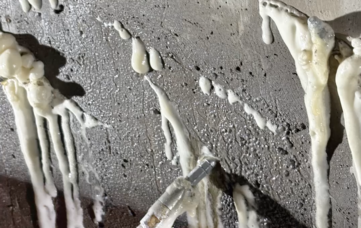
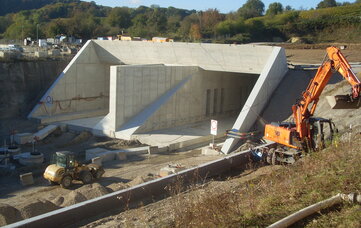
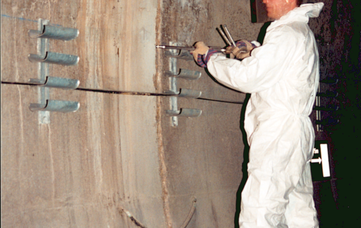
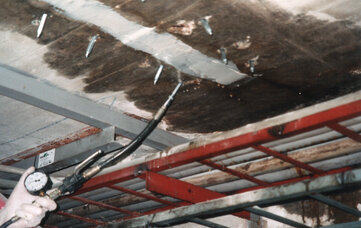
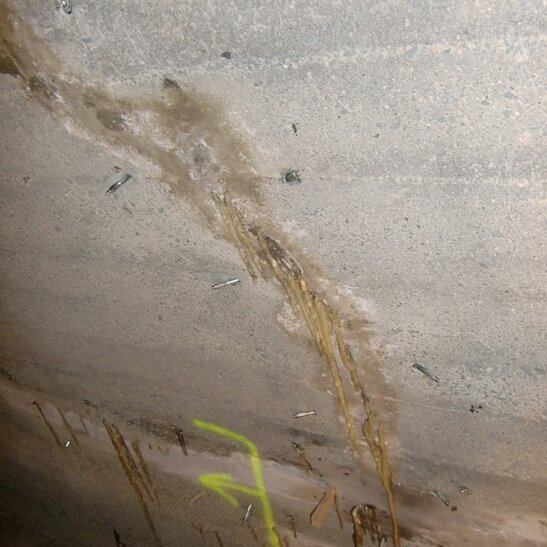
One of these facilities is the Mandelholz reservoir, which is dammed by a 28-meter-high earth dam. Inside the dam, there is a control tunnel arranged at right angles, which was originally constructed from concrete that was insufficiently compacted in places. Over the years, leaks and water ingress occurred, which significantly impaired the stability and inspectability of the tunnel.

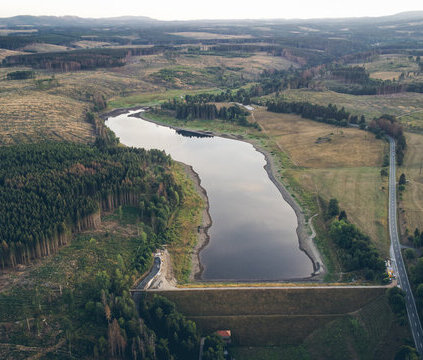
In order to maintain the functionality of the almond wood dust basin, measures had to be taken under the following conditions:
The structural condition analysis showed that some of the leaks were under water pressure and located in damp to wet environments. The task was therefore to seal the cracks and fill the cavities using a structural sealant – at temperatures as low as +1°C.
Regulatory situation and special solution
According to the guideline for the protection and repair of concrete components (Rili SIB, Part 2, Tables 6.2–6.4), a strict interpretation of the regulations means that the renovation objectives and the environmental conditions are mutually exclusive:
Under these circumstances, a solution that complied with the regulations did not seem feasible. It was therefore necessary to find an alternative technical approach.
DIN EN 1504-5 as a solution
The European standard DIN EN 1504-5 offers some leeway here. It allows free choice of injection materials as long as their performance meets the requirements. The conformity assessment procedure 2+ (Building Regulations List B, Part 1, Section 1.1.7.2) confirms the applicability of such products – regardless of the type of material. This means that structural injection with PU resins is legally permissible, provided that the performance has been verified.
Success through solidification of PU resin
The WEBAC 1660 solidifying PU injection resin was used in the renovation of the control tunnel. The material impressed with its:
Despite adverse conditions, the renovation was successfully completed. The tunnel is now fully accessible again and allows permanent monitoring of the dam structure—dry, safe, and stable.
PU Injection Resins
WEBAC 1660 is a CE-certified PU injection resin with high compressive and bending tensile strength. It foams slightly upon contact with water and, under dry conditions, cures into a virtually pore-free, solid, and waterproof material. It is used for sealing, bonding, and structural solidification of concrete and masonry; for filling cavities/voids and gravel pockets; and for structural bonding of dry voids in rubble masonry and loose rock.


Get information now for users of products containing diisocyanates.