PU Injection Foam Resins
WEBAC® 150
- Classic Line
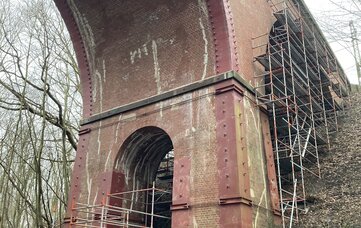
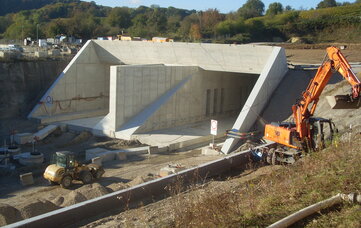
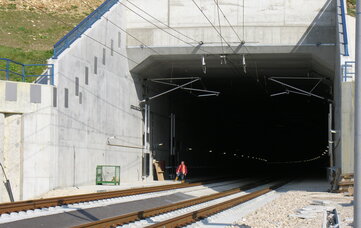
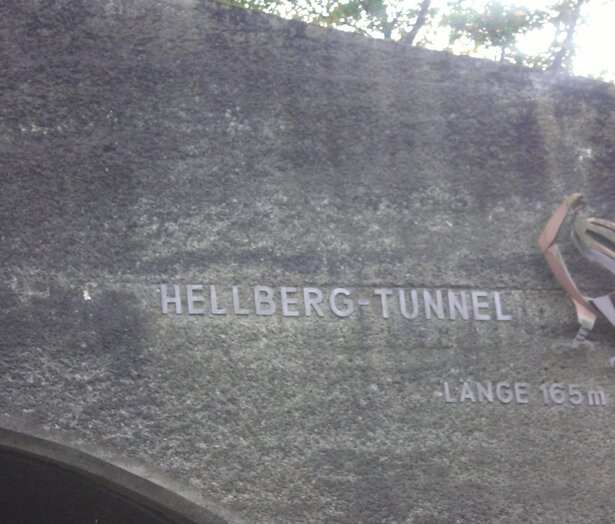
The Hellberg Tunnel, which is around 160 meters long, was built in the early 1960s as part of the Kirn bypass (B41). Today, more than 9,000 vehicles pass through this important link every day—a volume of traffic that has left its mark over the decades. Comprehensive repairs were therefore unavoidable.


Renovation measures in existing buildings
In July 2007, the eleven-month concrete renovation of the Hellberg Tunnel began. The focus of the measures was on permanently sealing cracks and restoring the functionality of expansion joints—key elements for the longevity of the structure.
Injection technology implementation
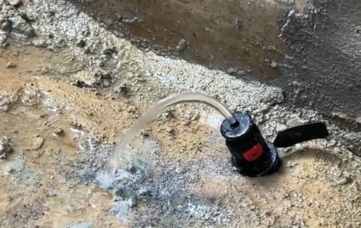
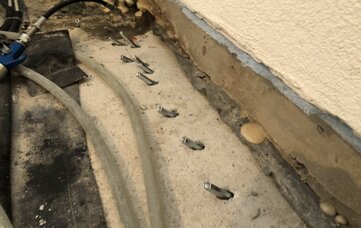
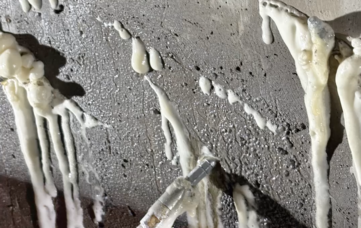
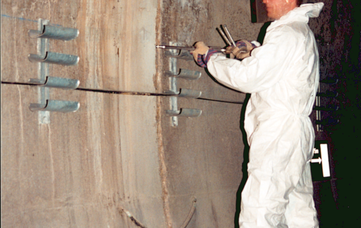
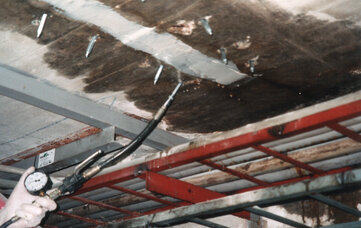
After partially exposing the concrete surfaces, the arrangement of the drill holes for crack injection was planned in a grid pattern in accordance with the specifications of ZTV-ING. The injections were carried out in several steps:
Result
Thanks to the sophisticated use of high-quality injection systems from WEBAC, the Hellberg Tunnel was successfully repaired. It now reliably fulfills its function of relieving traffic congestion in Kirn once again—and is protected against moisture and cracking in the long term.
PU Injection Foam Resins
WEBAC 150 is a versatile PU injection foam resin (SPU) that is particularly valued for its safe and easy application. Upon contact with water, it cures with significant expansion to form a surface-tight, firm-elastic foam with a very fine-cell structure. This makes it suitable for the rapid, temporary closure and sealing of pressurized water-bearing cracks, cavities/voids, and leaks in building construction, civil engineering, bridge construction, and tunnel construction.
PU Injection Resins
WEBAC 1405 is a low-viscosity, CE-certified PU injection resin. It cures with constant volume to form an elastic, limited-elasticity resin. Upon contact with water, it forms a uniform, closed, and watertight pore structure. It is used for closing, sealing, and limited-elasticity filling of dry, damp, or water-bearing cracks, as well as for sealing cavities/voids in building construction, civil engineering, bridge construction, tunnel construction, and shaft construction.
Acrylat Gels
WEBAC 240 is a low-viscosity, fast-setting polyacrylate injection gel with National Technical Approval from DIBt (B-concentration 2%). After curing, it forms a waterproof, firm-elastic gel that reliably absorbs dynamic and mechanical stresses. It is particularly suitable for curtain injection—either in the subsoil immediately adjacent to the structural element or within the existing building structure—as well as for subsoil stabilization and waterproofing or damp proof courses (dpc).


Get information now for users of products containing diisocyanates.