PU Injection Resins
WEBAC® 1403
- Classic Line
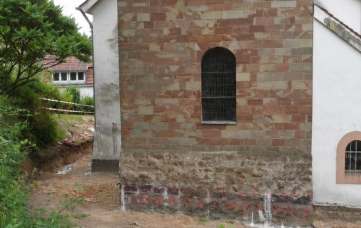
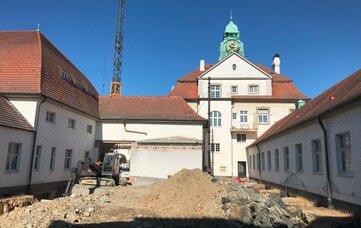
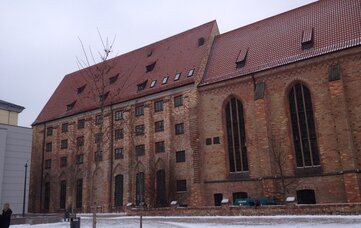
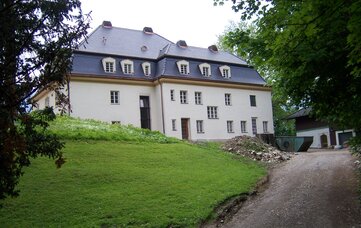
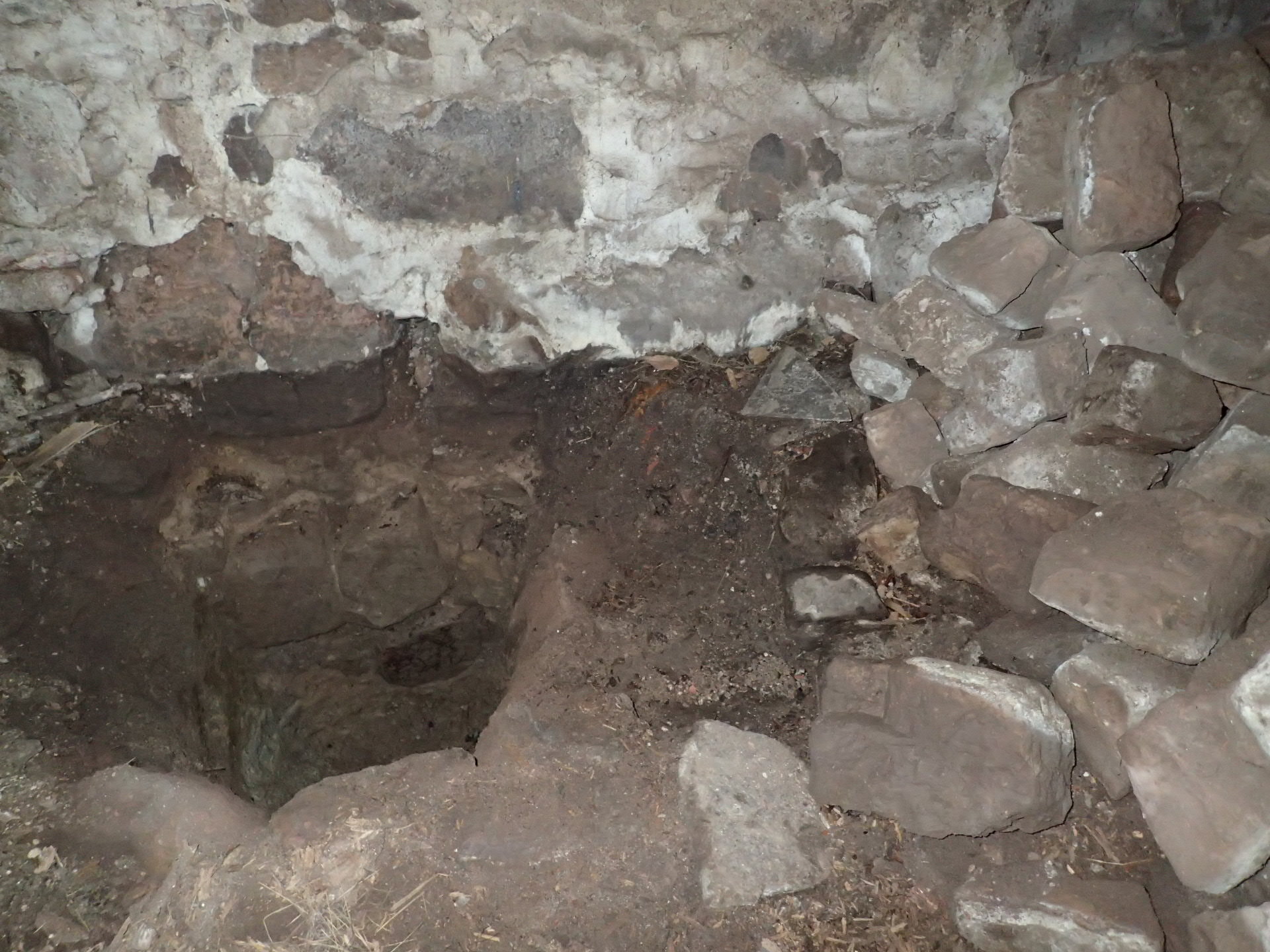
As part of the planned conversion of a historic barn on the grounds of the Bebenhausen Monastery and Castle into residential space, extensive structural condition surveys were conducted. Due to the building’s location on a slope, elevated moisture levels caused by waterlogging were observed, particularly on the northwest side.
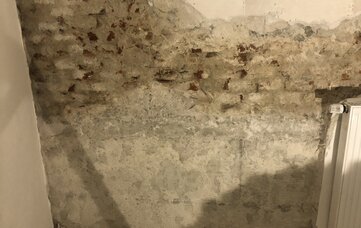
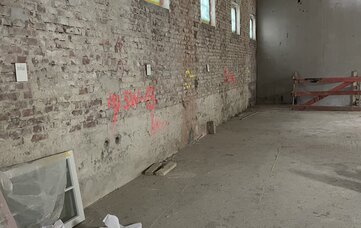
The masonry consists of natural stone with some brickwork. Significantly elevated salt levels were detected in the joint mortar, attributable to the building’s former use for animal husbandry and the associated nitrate contamination. The natural stones themselves, however, exhibited only low moisture content—an indication that the masonry was already in the process of drying out.

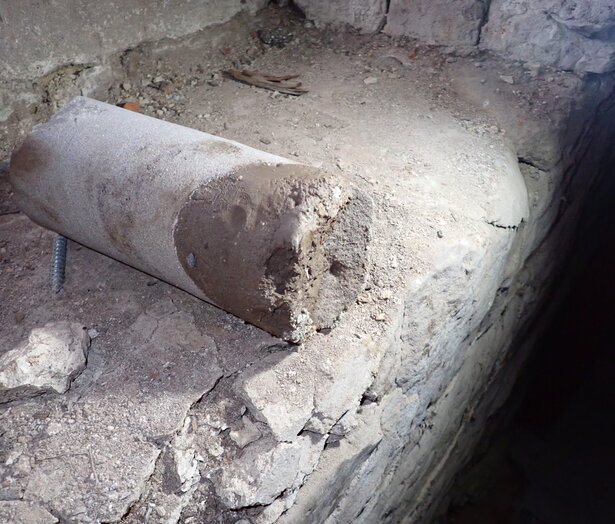
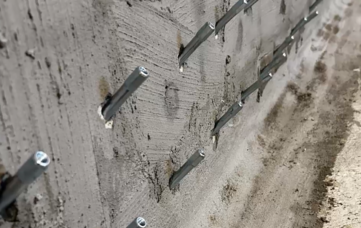
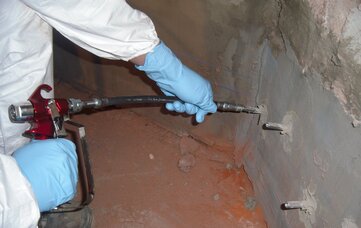
WEBAC 1401 was initially tested for long-term waterproofing. However, core sample analyses showed that this material did not achieve the desired results in the given combination of brick and natural stone masonry. The injection strategy was therefore adjusted.
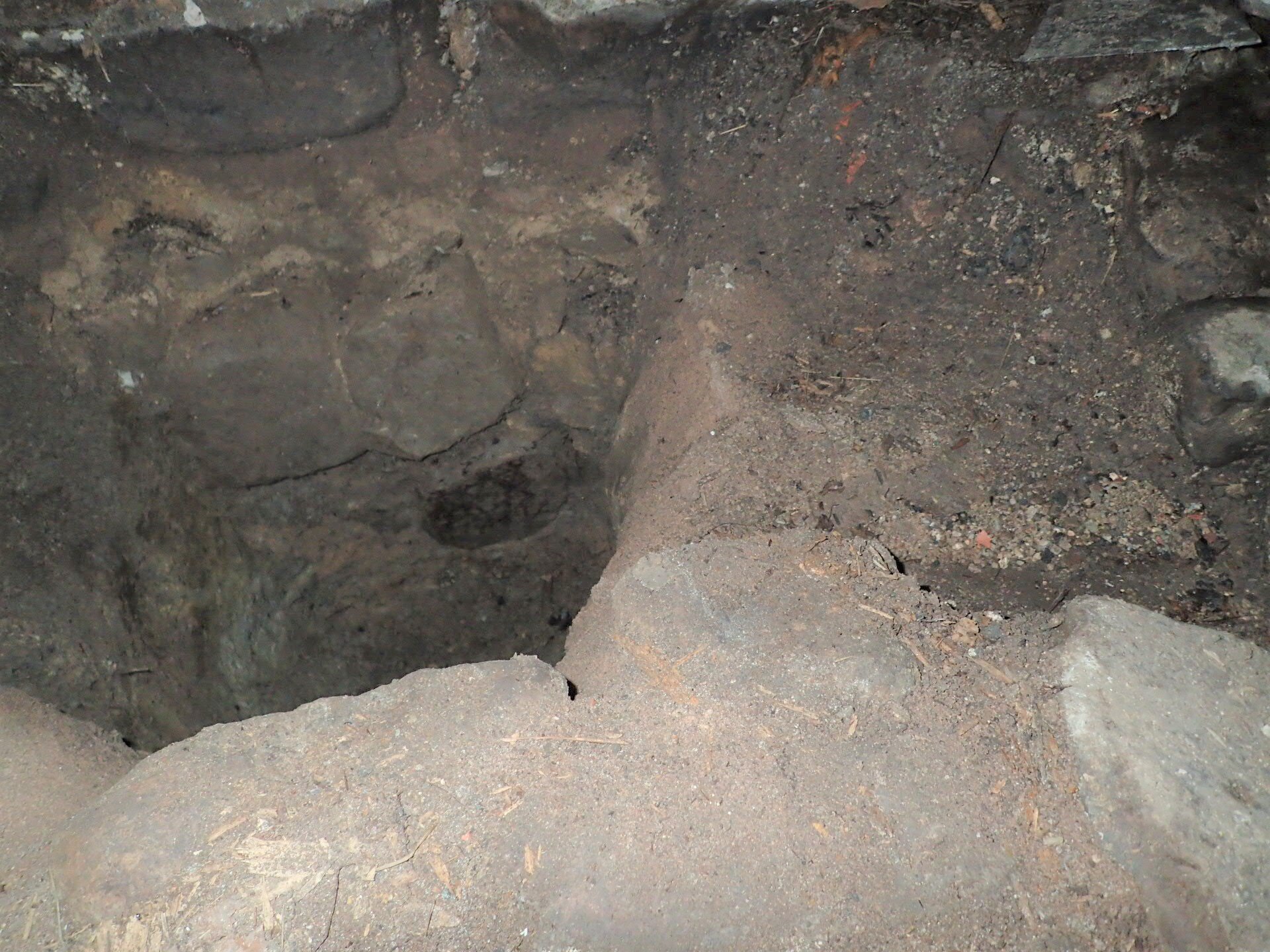
WEBAC 1403 and WEBAC 1440 were subsequently used. The capillary-blocking and hydrophobic injection resins proved to be significantly more suitable for the moisture-penetrated foundation masonry. The subsequent drying time is crucial to the success of the measure: for solid wall thicknesses, this can take up to three years. Adherence to these timeframes is necessary to prevent subsequent moisture damage to the new plaster system.
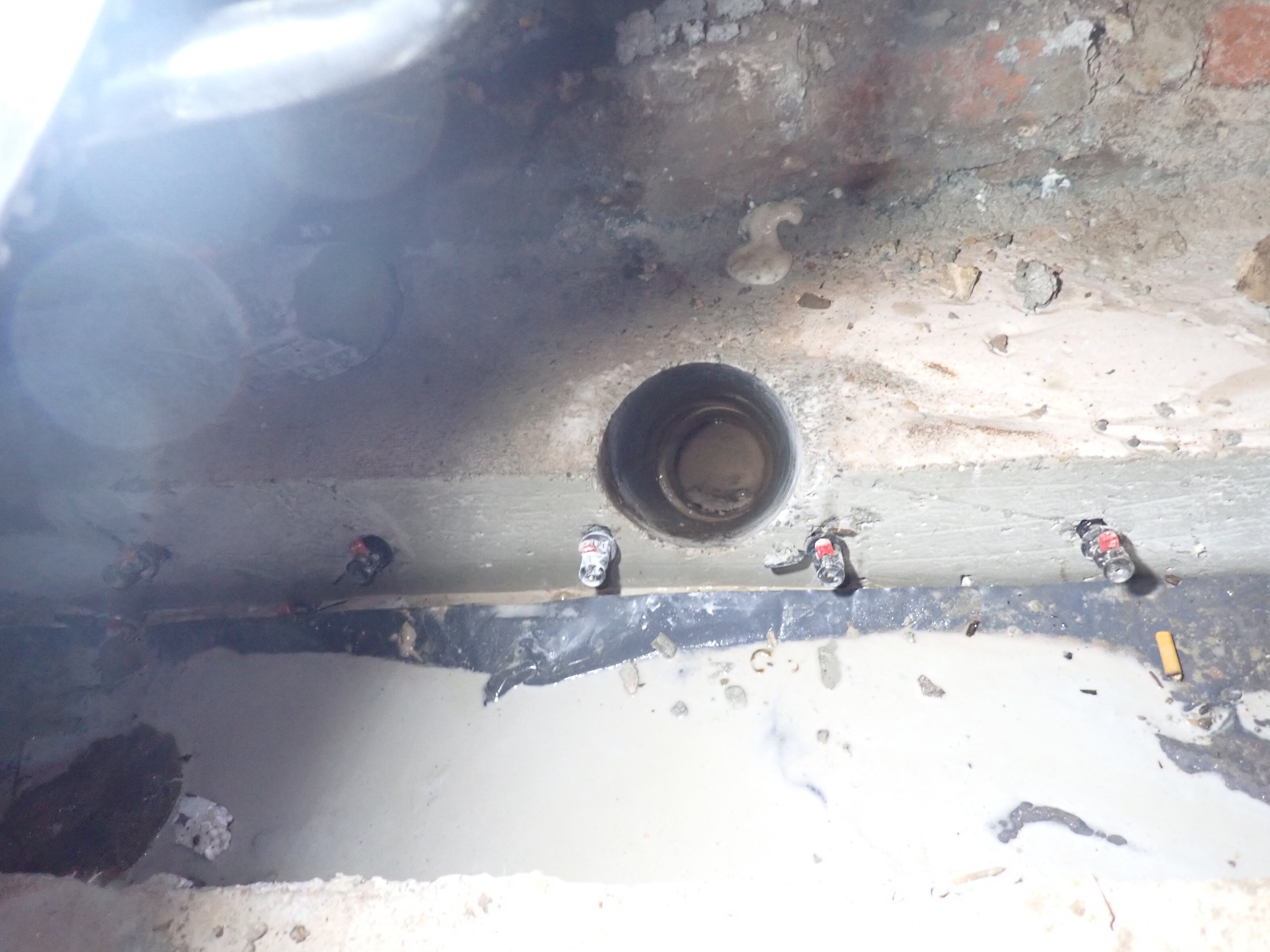
In addition, WEBAC 1660 was injected into the joint areas between the concrete underpinning and the existing structure. The pressure-resistant polyurethane resin forms a horizontal barrier there and limits moisture ingress from the foundation area.
Through the coordinated combination of injection, waterproofing, and controlled drying, the historic building components were sustainably prepared for their new use—while respecting the building’s heritage-protected structure.
PU Injection Resins
WEBAC 1403 is a long-track-record proven PU injection resin, particularly valued for its safe and controlled application. Upon contact with water, it cures into a closed, waterproof, and dimensionally stable resin with a fine pore structure. It is suitable for sealing, crack injection, and stabilizing masonry and concrete, and is used for post-construction damp proof courses (dpc) against capillary rising damp.
PU Injection Resins
WEBAC 1440 is a highly flexible PU injection resin that forms a tear-resistant foam structure and is particularly suitable for structures with cavities/voids. It cures with constant volume to form a chemically highly resistant resin that stabilizes porous masonry and increases its strength and waterproofing properties. It is used for closing, sealing, and creating limited-elasticity joints between building components and is suitable as a post-construction damp proof course (dpc) against capillary rising damp in various types of masonry.
PU Injection Resins
WEBAC 1660 is a CE-certified PU injection resin with high compressive and bending tensile strength. It foams slightly upon contact with water and, under dry conditions, cures into a virtually pore-free, solid, and waterproof material. It is used for sealing, bonding, and structural solidification of concrete and masonry; for filling cavities/voids and gravel pockets; and for structural bonding of dry voids in rubble masonry and loose rock.


Get information now for users of products containing diisocyanates.