PU Casting Foam Resins
WEBAC® 2260/B60
- Classic Line
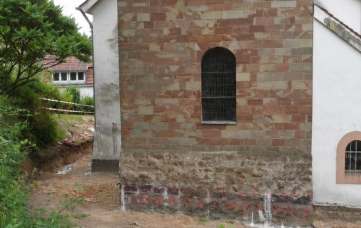
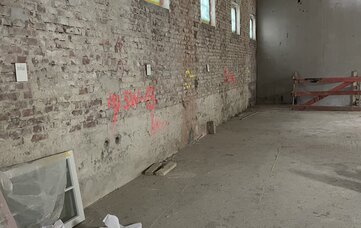
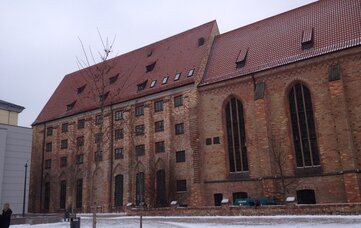
The Hannover Nordstadt Clinic can now look back on over 130 years of history. Since it opened in 1895, the hospital's buildings have been continuously expanded, modernized, or repaired after war damage. During the construction of a new surgical wing in 2005, extensive renovations took place in the basement area of the historic main building. The exterior walls consist of double-shell masonry, typical of the construction methods of the time.


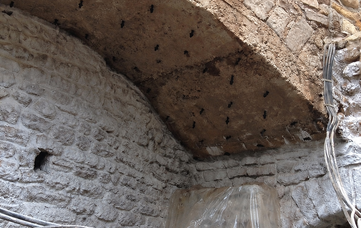
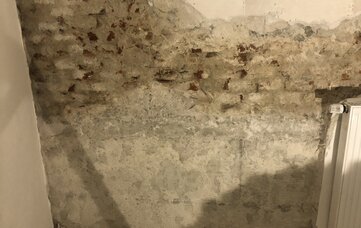
The double-shell masonry of the exterior walls showed signs of severe moisture damage caused by capillary rising damp. To ensure lasting protection for the basement rooms, a post-construction damp proof course (dpc) was required. An additional challenge was posed by the cavity layer, which extended between the load-bearing inner shell and the facing masonry, even below the ground level to the basement floor.
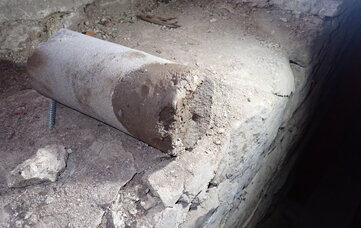
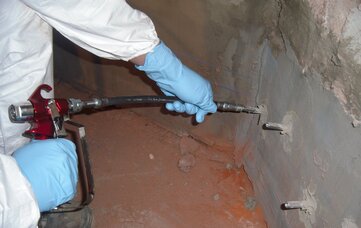
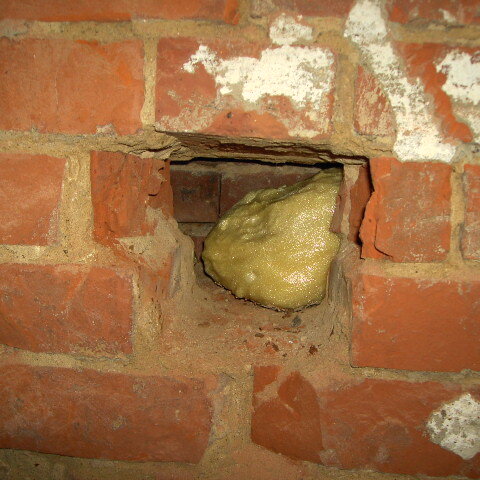
In preparation for the damp proof course (dpc), the cavities/voids were first filled with WEBAC 2260 casting foam resin. This material provides a pressure-resistant, closed-cell filling, which prevents the subsequent injection agent from flowing into the cavity layer. With a compressive strength of up to 1.8 MPa (N/mm²), the foam offers sufficient resistance to the injection pressure. At the same time, the resin acts as a vertical barrier and permanently prevents moisture from penetrating the space between the shells.
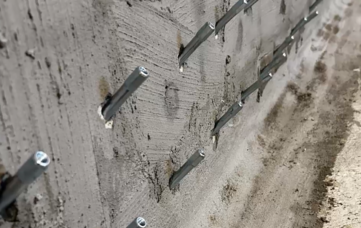
Holes were drilled directly above the basement floor and at a height of approximately 50 cm so that the material could be applied in layers. Additional openings were used for ventilation and visual inspection. The WEBAC 2260 material used expanded to up to 14 times its original volume and completely filled the hollow layer up to the top edge of the ground.
After the foam resin had hardened, the actual barrier layer against capillary moisture was applied using a polyurethane injection resin.
PU Casting Foam Resins
WEBAC 2260 is a slow-expanding, thermally insulating PU casting foam resin. It cures into a pressure-resistant, non-brittle rigid foam with a fine-pored, closed-cell, and hydrophobic structure. It is used to fill voids, cracks, and gaps, e.g., in double-shell masonry or around pipe penetrations, and also serves as a sealant.


Get information now for users of products containing diisocyanates.